![[Translate to English:]](/fileadmin/_processed_/2/b/csm_Kaiserliche-Schatzkammer2_2405fe7801.jpg "[Translate to English:]")
Imperial Treasury Vienna

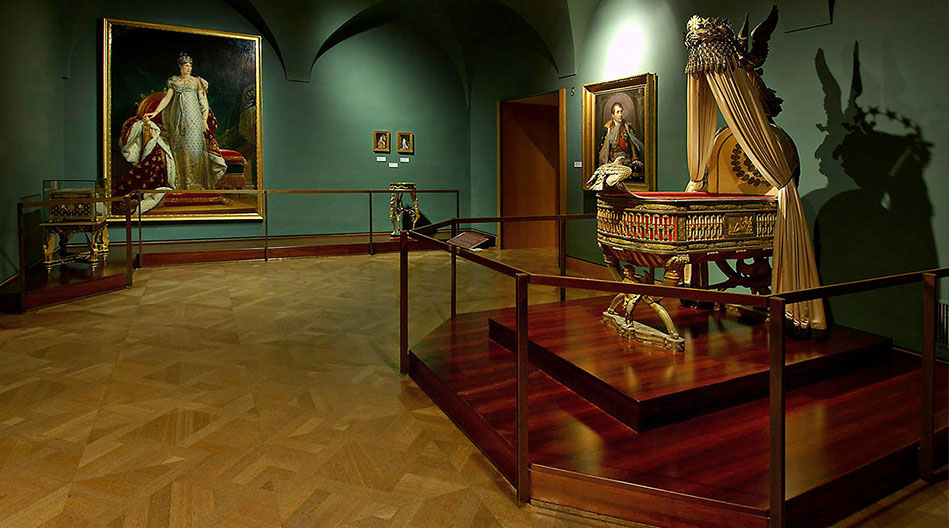
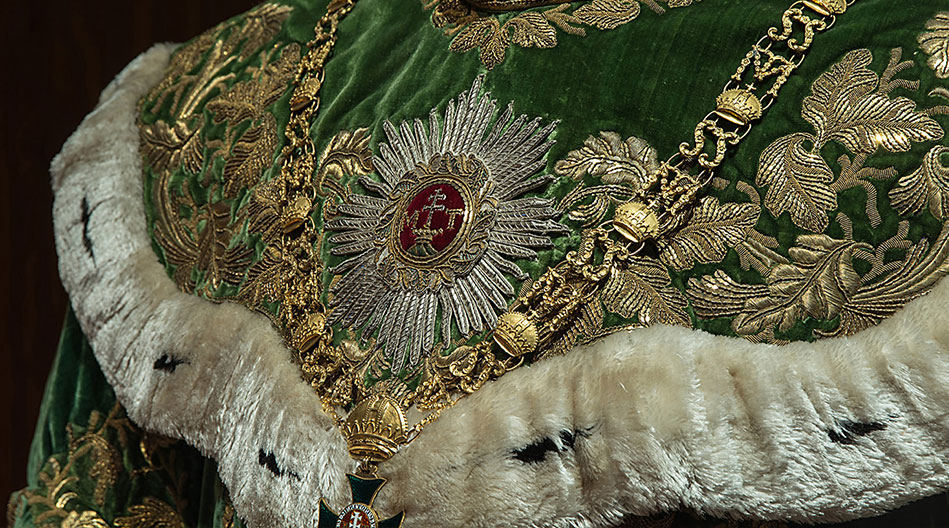
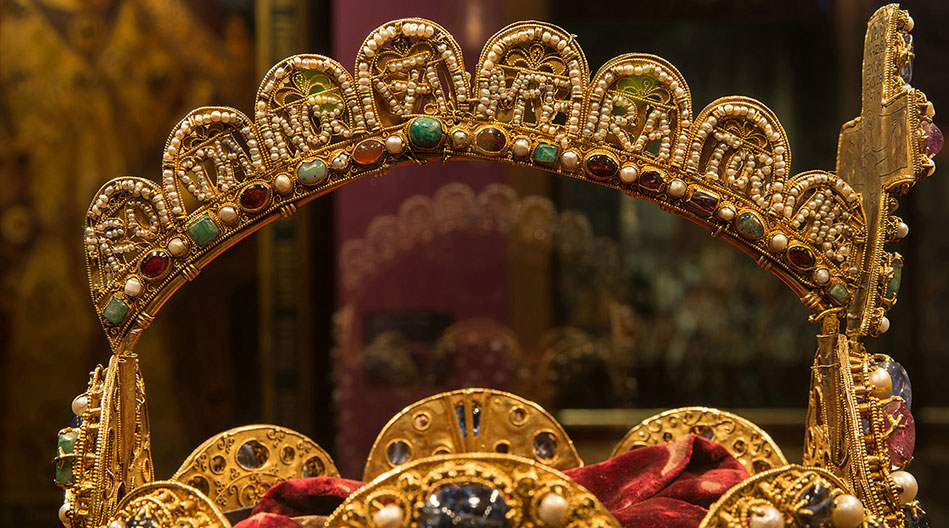
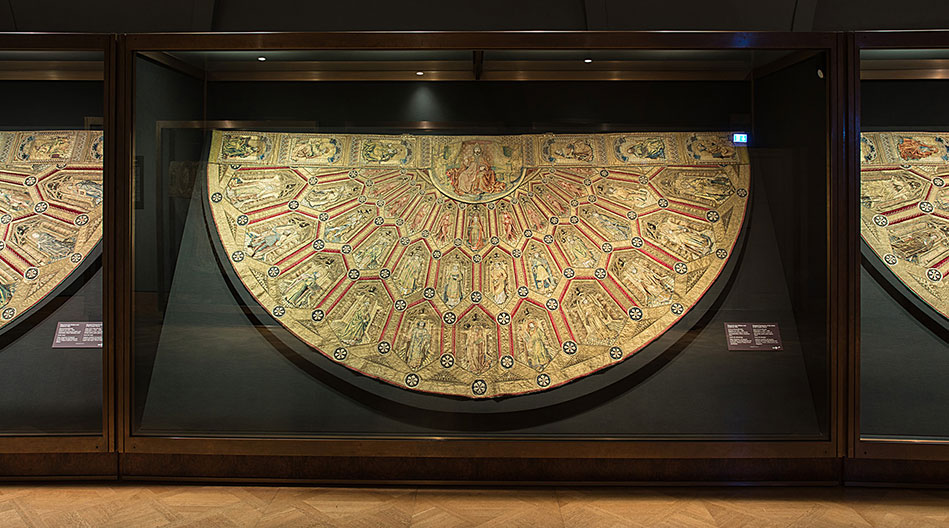
What should you keep in mind when visiting the treasure chamber?
Directions
Public Transportation
Subway: U3 Herrengasse
Tram: 1, 2, 71, D Burgring
Bus: 1A, 2A Michaelerplatz
HOP ON HOP OFF
Stop: Kunsthistorisches Museum (red/blue/yellow line)
Price
Free admission with the Vienna PASS and Vienna FLEXI Pass
Here's How Admission Works
With your Vienna PASS or Vienna FLEXI Pass, you can skip the ticket counters and go straight to the entrance. Show your pass and enter the exhibition.
Why is a visit to the Imperial Treasury worth it?
The Imperial Treasury in the Hofburg houses unique treasures of the Habsburgs, including the Austrian Imperial Crown and the Crown Jewels of the Holy Roman Empire, featuring the Imperial Crown and the Holy Lance. Other highlights include the treasures of the Order of the Golden Fleece and parts of the Burgundian Treasure from the 15th century. Here you’ll also discover legendary treasures such as the agate bowl, interpreted as the “Holy Grail,” and the world’s largest cut emerald.
These unique works of art and symbols of power make the Imperial Treasury in Vienna one of the most important treasuries in the world.
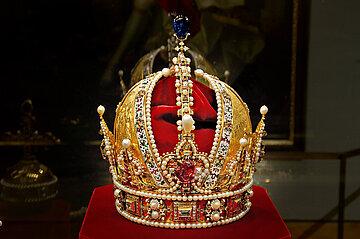
Imperial Crown
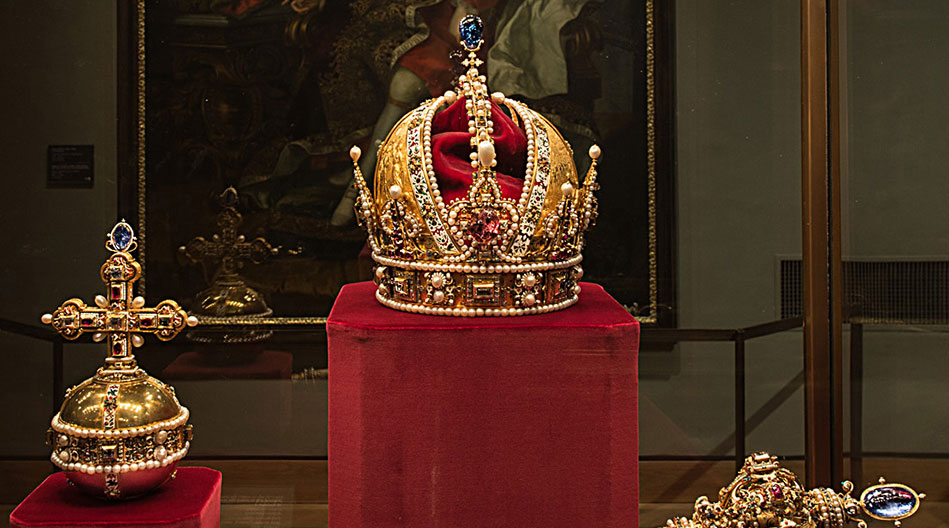
The Austrian Imperial Crown, also known as the Crown of Rudolf, is one of the most significant regalia of the Habsburg dynasty. It was created for Emperor Rudolf II and later designated as the official crown of the Austrian Empire. In the Imperial Treasury, it symbolizes the dynasty’s power and claim to the throne.
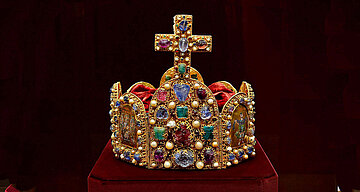
Relics of the Holy Roman Empire
The Treasury houses the crown jewels of the Holy Roman Empire, including the Imperial Crown, the Holy Lance, and other regalia. These objects were used for centuries in the coronations of kings and emperors and are considered key artifacts of European history and the tradition of sovereignty.
Frequently Asked Questions About the Imperial Treasury
Is a visit to the Vienna Treasury worth it?
Yes, absolutely. The Treasury is one of the most important treasuries in the world. Among the items on display are the Imperial Crown of the Holy Roman Empire, the Austrian Imperial Crown, the Burgundian Treasure, and numerous relics and works of art. It is a must-see in Vienna, especially for those interested in history and culture.
Is the treasure chamber suitable for children?
Yes, generally speaking. Older children and teenagers who are fascinated by knights, crowns, treasures, and history will find many exciting exhibits here. For very young children, however, the visit may be a bit less engaging, since it is a traditional museum.
Is the visit included in the Vienna PASS / Vienna FLEXI Pass?
Yes. Both the Vienna PASS and the Vienna FLEXI Pass grant you free admission to the Imperial Treasury. Fast-track entry is also available.
What's the best time of day to arrive for admission?
It's best to go right when it opens at 9:00 a.m. That's usually when it's the quietest, and you can view the most important exhibits without a big crowd. Weekdays are also generally less crowded than weekends.
Are there set admission times or time slots?
With the Vienna PASS or Vienna FLEXI Pass, you don't need to reserve a time slot in advance. You can walk right up to the ticket counter and show your PASS at the entrance.
How long does a visit take?
For most visitors, 1 to 2 hours is ideal. Those who take a closer look at the exhibits or use an audio guide can stay significantly longer.
Last admission: 30 minutes before closing
Public
Metro:U3 Herrengasse
Tram:1, 2, 71, D Burgring
Bus: 1A, 2A Michaelerplatz
Hop On Hop Off
Bus Stop:
Kunsthistorisches Museum
Address
Hofburg, Schweizerhof,
1010
Vienna
Phone:
+43 1 525 24 0