![[Translate to English:] Schloss Belvedere](/fileadmin/_processed_/5/d/csm_header-belvedere_549c159965.jpg "[Translate to English:] Schloss Belvedere")
Upper Belvedere
What should you keep in mind when visiting the Upper Belvedere?
Directions
Public Transportation
Subway: U1 Hauptbahnhof (15 min)
Tram: O, 18: Belvedere Quarter; D: Belvedere Palace
Commuter Rail: Belvedere Quarter
Hop-On Hop-Off
Stop: Belvedere Palace (yellow line)
How does admission to the Upper Belvedere work?
With your Vienna PASS or Vienna FLEXI Pass, you can skip the ticket counter and go straight to the exhibition entrance. Please present your PASS there.
Do I need to reserve a time slot?
It is currently not possible for Vienna PASS and Vienna FLEXI Pass holders to reserve a time slot. The Upper Belvedere is one of Vienna’s most popular attractions, and visitor traffic is particularly heavy during peak travel season and on holidays. We recommend that you plan your visit between 10 a.m. and 11 a.m. or 3 p.m. and 5 p.m. There may be wait times between 11 a.m. and 2 p.m.
Carrying Backpacks and Bags
Backpacks and large bags are not permitted. Please bring a 2€ coin to store your bag in a locker.
Why is it worth visiting Belvedere Palace in Vienna?
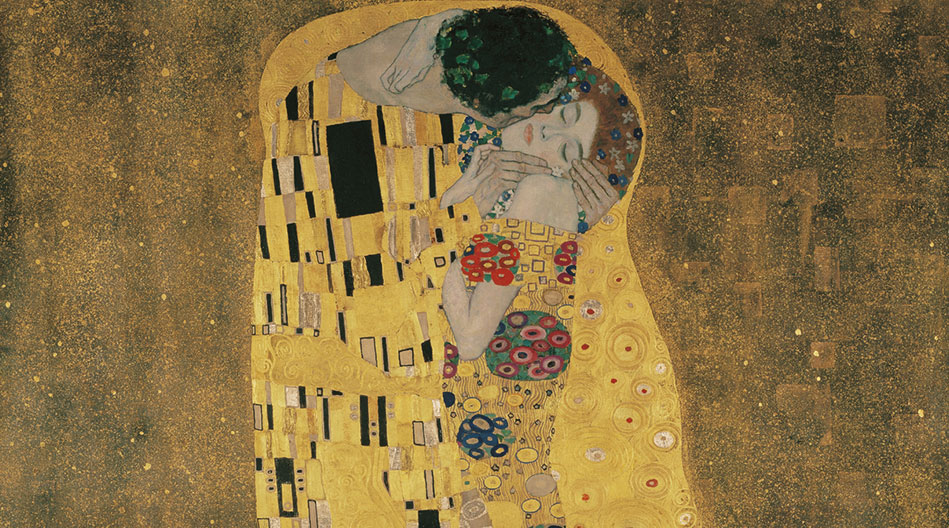
The Upper Belvedere is one of Vienna’s most famous landmarks, combining art, history, and architecture in one place. Visitors can explore the Baroque palace, the Belvedere Gardens, and one of Austria’s most important art collections. The museum houses works ranging from the Middle Ages to the present day, including Gustav Klimt’s famous painting “The Kiss.”
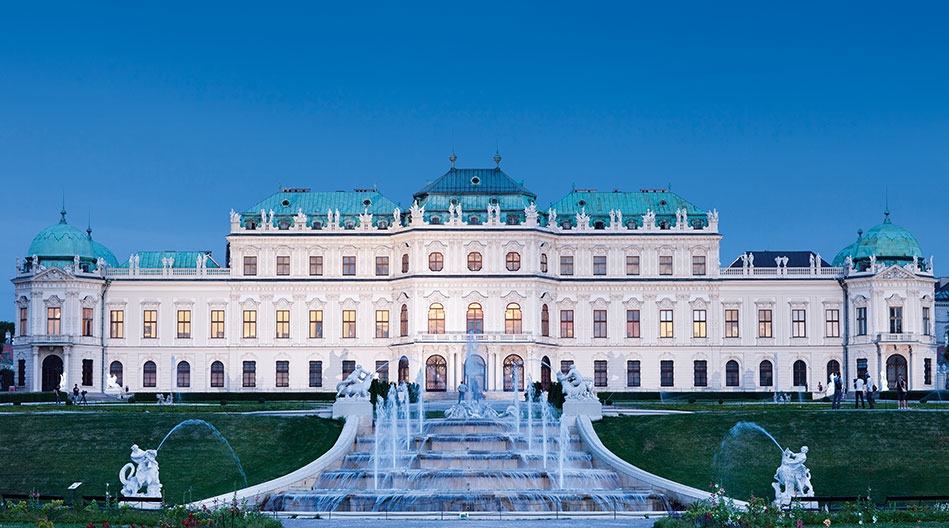
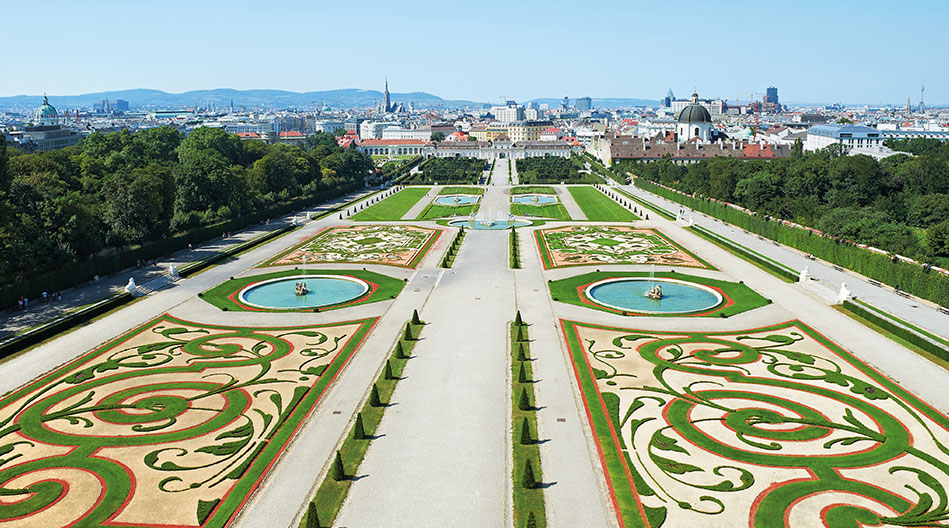
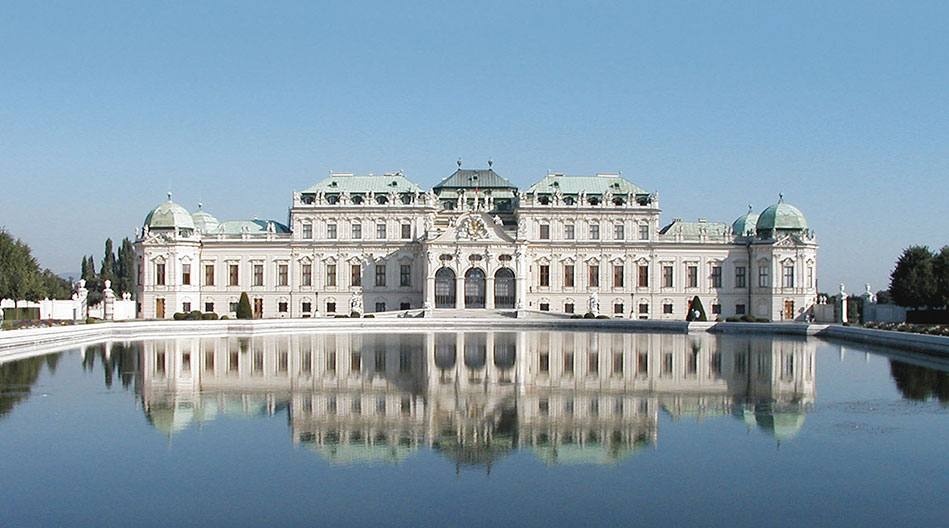
But the Upper Belvedere is also well worth seeing from the outside. The magnificent facade, with its green copper roofs and richly ornate details, makes Prince Eugene’s former summer palace a true eye-catcher. In front of it lies the terraced Baroque garden with fountains, sculptures, and artfully designed flower beds, which invites visitors to take a stroll and offers magnificent views of the palace and the city.
Upper Belvedere
The Upper Belvedere is home to one of Austria’s most important art museums. The collection spans from the Middle Ages to the present day and features paintings, sculptures, and other works of art from various eras. Among the most famous exhibits is Gustav Klimt’s “The Kiss”; also on display are works by Egon Schiele, Oskar Kokoschka, and other artists from Austrian art history.
- The collection Vienna 1880-1914, including the world’s largest collection of Gustav Klimt’s paintings, including the famous Art Nouveau works “The Kiss (Lovers)” and “Judith”.
- Key works of French impressionism by Paul Cézanne, Edgar Degas, Vincent van Gogh, Claude Monet, Edouard Manet, Camille Pissarro, and Pierre-Auguste Renoir.
- The greatest collection of Viennese Biedermeier art, including works by Friedrich von Amerling and Ferdinand Georg Waldmüller.
Belvedere Palace Park
The Belvedere Palace Park connects the Upper and Lower Belvedere and is considered one of the most significant Baroque gardens in Europe. Visitors can enjoy terraces, fountains, sculptures, and well-maintained green spaces with views of both palaces. The park is open to the public and invites visitors to take a stroll between the two museum buildings. At the same time, the palace park offers numerous photo opportunities—from the Baroque gardens to the views of the Upper and Lower Belvedere.
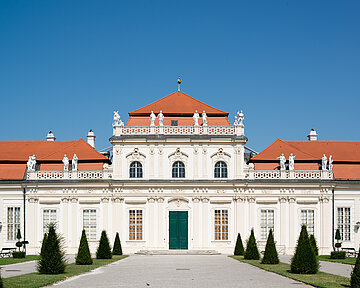
Lower Belvedere (A separate ticket is required)
At the Lower Belvedere, visitors can enjoy rotating exhibitions featuring art from various eras and themes. The Baroque palace enhances the exhibition experience with its historic state rooms, including the Marble Hall and the Golden Cabinet. The Upper Belvedere and the Lower Belvedere are two separate museums. With the Vienna FLEXI Pass, a separate admission ticket is required for each museum.
History of the Upper Belvedere
The Belvedere is one of the most beautiful and significant museums in the world and ranks among Vienna’s most visited attractions. Once situated amid vineyards just outside the gates of the imperial city, the two Belvedere palaces—connected by a unique Baroque garden—served as the summer residence of their builder, Prince Eugene of Savoy.
The Upper Belvedere—built between 1717 and 1723—rises imposingly on a hill, offering a fascinating view over Vienna.
At the far end of the sprawling, gently sloping park lies the Lower Belvedere, built between 1714 and 1716. Constructed as a private residence for Prince Eugene, its surviving state rooms bear witness to Baroque splendor and the art of living.
Frequently Asked Questions About the Upper Belvedere
Is a visit to the Upper Belvedere worth it?
Yes, the Upper Belvedere is one of the most popular attractions in Vienna. Visitors can look forward to the Baroque palace, an important art collection featuring Gustav Klimt’s “The Kiss,” and the Belvedere Palace Gardens.
Is the castle suitable for children?
Yes, families with children can also enjoy a visit to the Upper Belvedere. The palace grounds offer plenty of space for walking, and the art collection makes for a varied museum experience.
Is the Upper Belvedere included in the Vienna PASS / Vienna FLEXI Pass?
Yes, admission to the Upper Belvedere is included in both the Vienna PASS and the FLEXI Pass.
Can I also visit the Lower Belvedere and the Palace Park with the Vienna PASS or Vienna FLEXI Pass?
Yes. The Lower Belvedere is also included in the Vienna PASS and the FLEXI Pass. Since the Upper and Lower Belvedere are two separate museums, the FLEXI Pass requires a separate admission ticket for each. The Belvedere Palace Park is open to the public and can be visited free of charge.
What is the best time of year to visit the castle?
The Upper Belvedere is worth a visit all year round. Spring and summer are particularly popular, when the palace gardens are in full bloom. In the fall, the colorful trees create a special atmosphere, while the palace is often much quieter in the winter - except around the holidays.
What's the best time of day to arrive for admission?
It's best to visit the Upper Belvedere first thing in the morning or later in the afternoon. At these times, there are often fewer visitors than around noon.
Are there set admission times or time slots?
With your Vienna PASS or Vienna FLEXI Pass, you do not need a time slot. Please present your PASS directly at the entrance to the exhibition halls. You do not need to purchase a ticket at the box office.
How much time should you set aside for a visit to the Belvedere?
You should plan on spending about 1.5 to 2 hours at the Upper Belvedere. If you’d also like to visit the palace gardens and the Lower Belvedere, we recommend setting aside at least 3 to 4 hours.
Upper Belvedere
Public
Metro:U1 Hauptbahnhof (15min)
Tram:O, 18: Quartier Belvedere; D:Schloss Belvedere
Train:
Quartier Belvedere
Hop On Hop Off
Bus Stop:
Schloss Belvedere
Address
Prinz Eugen-Straße 27,
1030
Vienna
Phone:
+43 1 79 557 0
![[Translate to English:]](/fileadmin/_processed_/2/0/csm_Belvedere-21_62444c59b3.jpg "[Translate to English:]")